Play School
1966–present
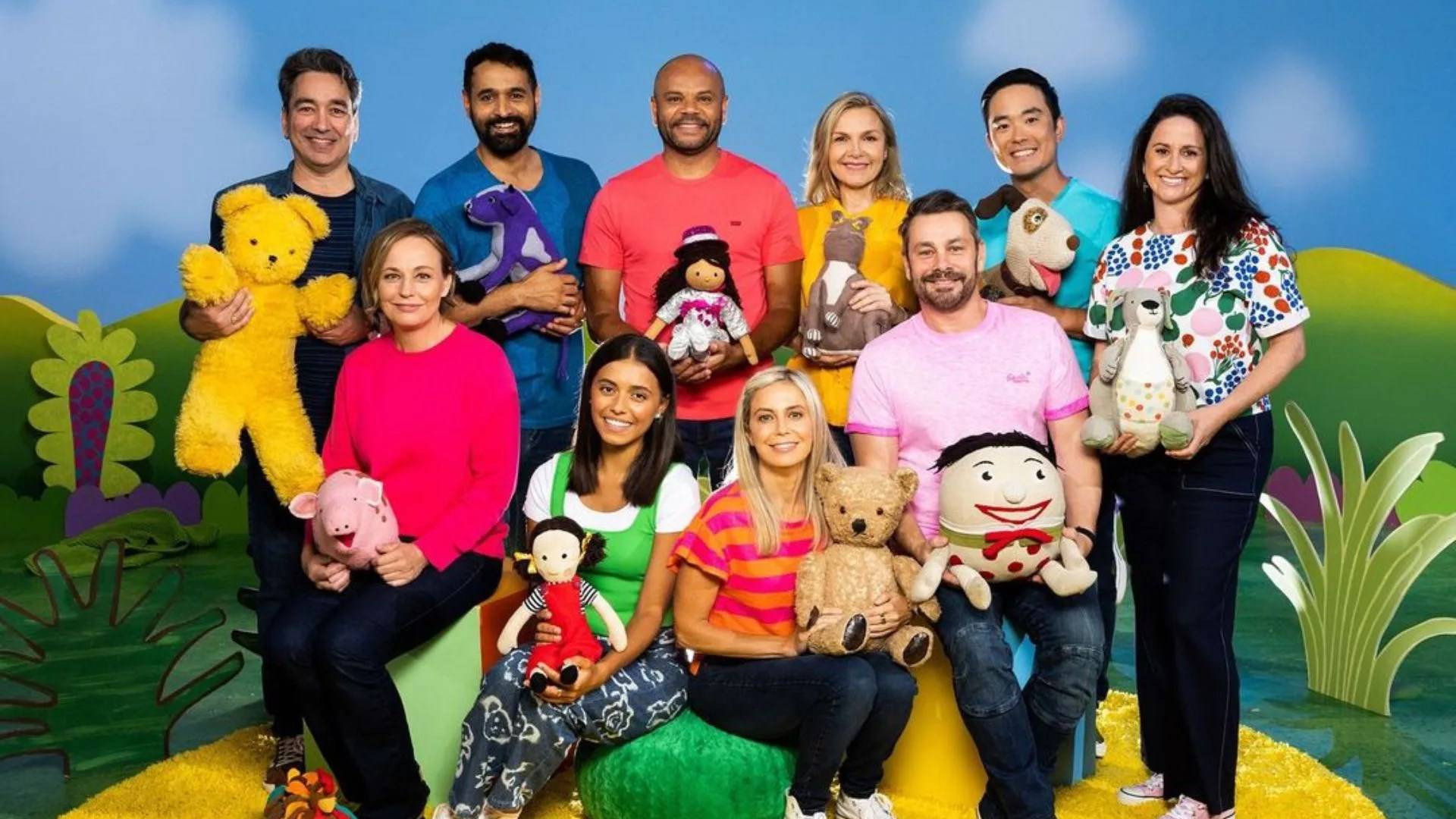
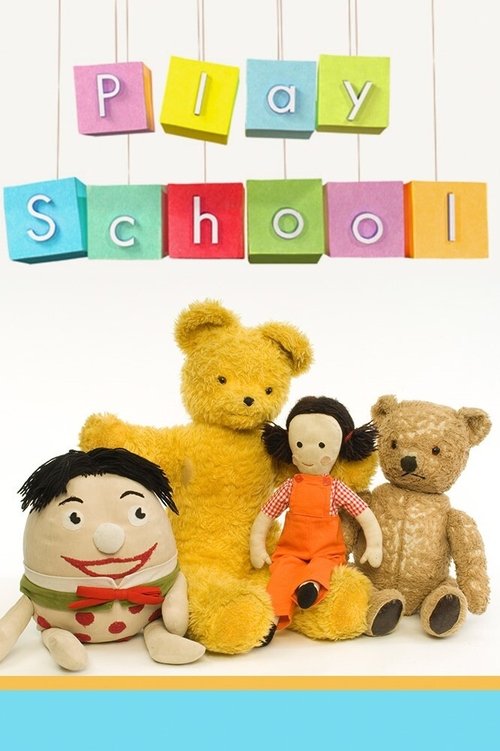
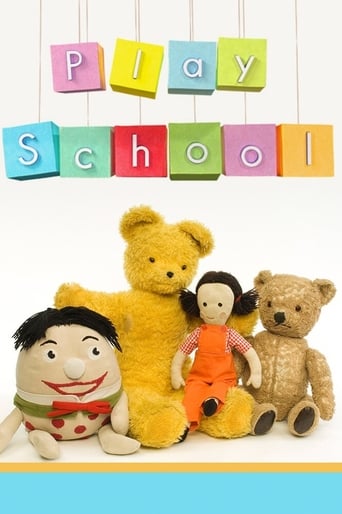
Play School is an Australian Gold Logie award winning educational television show for children produced by the Australian Broadcasting Corporation and then Southern Star Entertainment in 2014. It is the longest-running children's show in Australia, and the second longest running children's show in the world. In 2016, Play School celebrated 50 years on the air. An estimated 80% of pre-school children under six watch the programme at least once a week. It is screened twice every weekday afternoon at 3:05 pm on ABC1 every day 9:30 am and weekday 4:30 pm on ABC2's ABC4 Kids.
- First aired
- 1 Jan 1966
- Episode length
- 25 min
- Country
- Australia
- Language
- English
- Writers
- Deborah Boerne, Mark Barnard, Tammy Burnstock
- Executive producer
- Jan Stradling
- Producer
- Sophie Emtage
- Elsewhere
- TMDB
Checking where it is showing…
How members shelved it
Nobody has logged this yet.
Seasons · 122 episodes
Season 1 · 1966
Loading episodes…

Season 138 · 2011
Join Abi, Teo, Leah, Karen, Andrew and Sofya as they enjoy the fun of putting on a show! See them create costumes and props, and set up a theatre as they act out some favourite nursery rhymes and songs. There are plays with puppets, magic tricks and lots of fun and games with the Play School toys. Featuring: Teo Gebert, Sofya Gollan, Andrew McFarlane, Karen Pang, Abi Tucker, and Leah Vandenberg.
Loading episodes…

Season 148 · 2008
Loading episodes…
Season 234
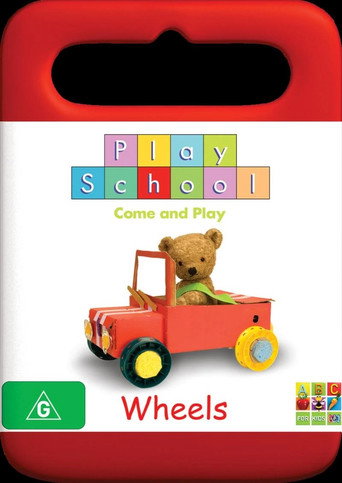
This week in Play School we explore wheels and the many ways they help us in our daily lives. Children are given the opportunity to explore how wheels help us move, work and play through activities, films, stories and songs.
Loading episodes…
Season 238 · 2008
A young baby first learns to recognise the familiar faces of parents, family and friends. As the child develops self awareness, they are very aware of how they look, and how they differ from those around them. They also notice the changes in their body and face as they grow older. After the "scribbling" stage, simple faces are among the first drawings of young children. Young children also enjoy being actively involved in simple hygiene and bathing activities which help foster confidence, good health and a positive self image. This week in Play School we explore many opportunities for young children to develop their curiosity and self awareness. Each day we sing "Dancing Face", a fun action song which allows children to explore their appearance and the movement of their faces.
Loading episodes…
Season 239
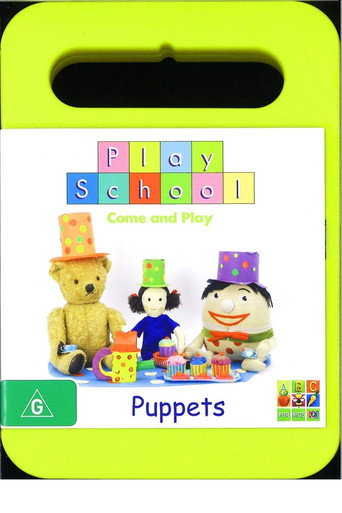
Puppets have been found in all cultures throughout history and are still enjoyed by many today. They can be used to tell stories, to entertain, to develop self confidence and expression and to explore theatrical performance. Puppets can express feelings and ideas which some children may have difficulty expressing face to face. Making and using puppets also encourages creative imagination and develops manual dexterity. This week in Play School we explore simple puppets that can be made with everyday household materials. Each day we play with puppets in various ways to present rhymes, stories and free imaginative play.
Loading episodes…
Season 243 · 2008
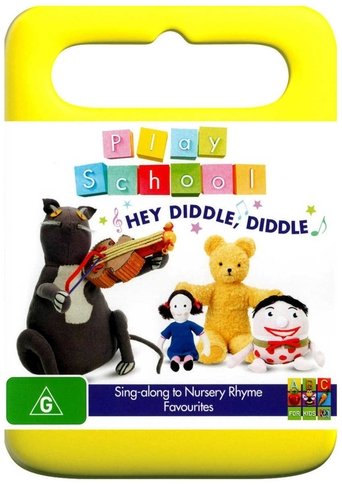
Nursery rhymes are traditional short poems and songs that have been passed down through the generations, such as "Baa, Baa, Black Sheep", "Twinkle, Twinkle Little Star", "Mary, Mary Quite Contrary" and "Jack and Jill". They are familiar to adults and children alike and are a way of sharing childhood traditions and social and oral history. Singing, saying and acting out nursery rhymes improves early literacy skills and encourages visualisation, imagination and play. The simple songs and rhymes included this week in Play School can be sung or said in traditional ways or modified to accompany play and the daily routines of eating, sleeping and washing. Each day nursery rhymes are used as a spring board for moving, singing, baking, making and playing. This week the Play School calendar is a large quilt with panels reflecting different nursery rhymes.
Loading episodes…

Season 261 · 2015
Young children are naturally musical. From first vocalisations to singing songs in tune and time with others, from tapping on household objects to producing carefully controlled instrumental accompaniments, the young child explores, listens to and creates music. In early childhood, musical experiences include singing, listening, playing, and moving. This week, the Play School team are visited by some special musical guests. Each day, we see people playing different instruments in an orchestra. We also explore home-made instruments, body percussion and the sounds produced by string, wind and brass instruments.
Loading episodes…
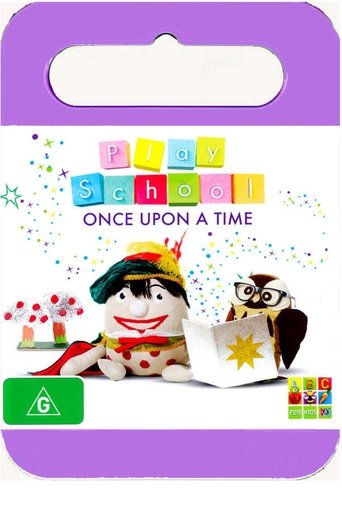
Season 262 · 2011
This week in Play School we have fun retelling traditional fairy tales. A fairy tale is a story told to children concerning the adventures of mythical characters such as fairies, unicorns, mermaids, giants and elves. These stories often involve princes and princesses and modern versions normally have a happy ending. Fairy tales often begin with the stock line "Once upon a time" and end with "they lived happily ever after". Throughout the week, the Play School presenters and toys have fun dressing up and retelling these magical stories. Each day, the Once Upon a Time Storybook is opened to reveal a new adventure. A magical teapot weaves its way through stories involving kings and queens, mermaids, wizards, genies, unicorns and fairies. On Friday, all these magical characters come together for a banquet.
Loading episodes…
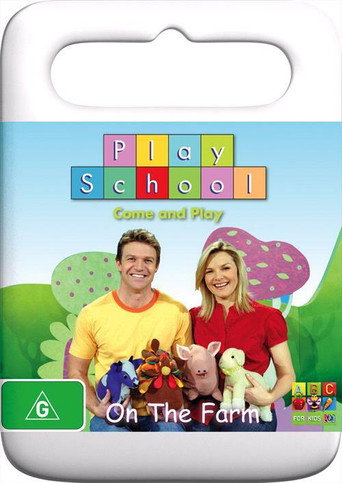
Season 264
This week Play School is filled with barns, windmills and tractors as we visit the farm and give children a sense of the farming lifestyle! We look at the different kinds of work that needs to be done on a farm, as well as food crops, conservation of water and caring for animals. On Monday we are visited by a mother duck and her ducklings and observe them at play. Every day this week, Farmer Big Ted rides his tractor and we sing Down on the Farm. The tractor is an essential part of farm machinery and each day we see it used in a different way - a trailer is attached and feed for animals and the harvest is transported, a plough is used and seeds planted and an auger is attached to dig a hole for a fence post. Through the windows we gain insight into life on an outback station, an alpaca farm, a potato crop, sheep shearing, a sheepdog rounding up sheep and produce being displayed for an agricultural show.
Loading episodes…

Season 267 · 2015
Join the Play School presenters and your favourite toys in creative play with squares, circles, triangles and rectangles. Explore the shapes we find all around us in our homes and gardens, our own shapes and animal shapes, with songs, stories and fun things to make.
Loading episodes…

Season 270 · 2015
Paint and paste, pour, squish and squeeze with Justine, Andrew, Jonny, Teo, Leah and Emma as they have fun exploring all sorts of ways to create pictures and sculptures. In this series Play School visits some well-known artists and watches them work, and sets up its own gallery. Theres also a special visitor to the Play School set, Matthew the Donkey, as well as great games, stories, songs and your favourite Play School toys.
Loading episodes…

Season 281 · 2013
Young children enjoy learning about dinosaurs and using their imaginations to think about what their world might have been like in pre-historic times. Children also enjoy stomping about and roaring like dinosaurs and looking at pictures of these fantastic creatures of long ago. This week we sing songs, tell stories and make craft activities inspired by dinosaurs.
Loading episodes…

Season 282 · 2014
The In the Wild series recognises that young children are curious investigators, who learn about the world around them as they play, discover and explore. In the Wild encourages a spirit of adventure as young children and their families are invited to share in a series of exciting escapades with the Play School toys and presenters. We explore wild places and spaces, discover wild animals and rare plants and play with the wild possibilities of imaginary worlds. Features Andrew McFarlane, Emma Palmer, Teo Gebert, Leah Vandenberg, and Zindzi Okenyo. 5 × 26 minute episodes.
Loading episodes…

Season 284 · 2013
This week in our All Aboard! series we create many opportunities for children to extend their knowledge about trains as a form of transport. We achieve this through role play, painting, singing and cooking activities. Each episode features our "film of the week" Train Montage, with lots of different types of trains chugging and chuffing on journeys to and from all sorts of places! We hope you and your children enjoy this series of All Aboard!
Loading episodes…

Season 285 · 2013
Young children are very responsive to sound and movement, particularly in the form of rhythm and music. They love to move their hands and feet and whole bodies in response to variations in pitch, tempo and rhythm. In this series of Play School we invite children to explore, discover and respond to sound and music in their homes, the natural environment and when out and about. Every day, we make and explore all kinds of percussion with some of Australia's top percussionists performing so me favourite pre-school songs. We are also joined in studio by two very special guests, Australian Aboriginal elder and artist, Walangari Karntawarra, and ARIA award winning singer/songwriter, Katie Noonan.
Loading episodes…

Season 296 · 2014
From a very early age, children are interested in colour in their world. Discovering, mixing and matching colours are exciting experiences that encourage imagination. We explore colour in nature, painting, culture, food and experiments. We paint a rainbow, stage a pink piggy opera, visit a sari shop and a paint factory! There are endless possibilities for children to interact and play with colour.
Loading episodes…
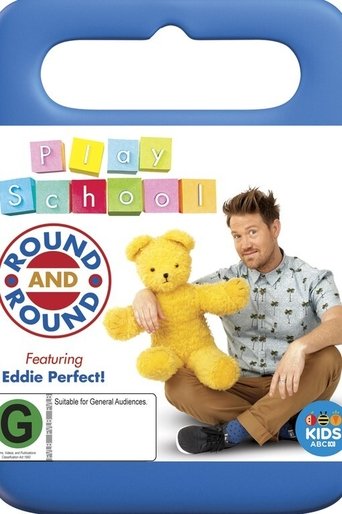
Season 305 · 2015
This week in Play School we discover things that go round and round! Join us as we spin the Spinners are Grinners Wheel and learn about things that twist, turn and twirl in the home, on the farm, in the city and outdoors. We also explore body movement, see how wheels help us move and look through the windows to see some children sing Ring a Ring a Rosie, have a teddy bears' picnic and play with things that go round and round in the park!
Loading episodes…
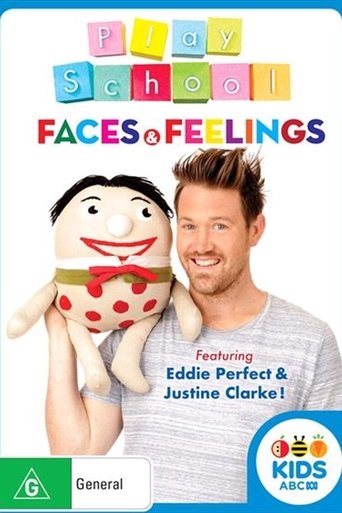
Season 306 · 2015
In this series of Play School we use a diverse range of stories, songs, craft and play to explore faces and feelings. The human face is a first and most significant focus for the new born infant. Faces are full of life and variation and can show that someone is interested and responsive. As young children grow and develop they begin to understand the ways in which faces can reflect thoughts and feelings and how they can use their own faces to express their own feelings. Greater understanding of facial expression and the feelings of oneself and others can help young children to learn to identify and respond positively to the feelings of others. Come along as we make things for the Play School portrait gallery, play dress ups, meet some rabbit visitors, make a baguette crocodile and much more. We also look through the windows as children introduce us to some special faces in their lives.
Loading episodes…
Season 316 · 2016
In this series, every day is a celebration. Each episode will focus on an event that is important and familiar in the pre-schoolers' world, with a strong focus on birthdays. Celebrations often involve gatherings of family and friends. Along with gifts, games and special food, birthdays also mark physical, mental and social growth. Turning another year older often means sharing in a special celebration, a birthday meal or party, or a cake. It is also a chance for children to plan their important day and express their creativity through the design of party invitations, games and decorations. Join the presenters and some special guests as they get ready for all sorts of celebration activities. Eddie becomes the piano-playing Mr Honky Tonk, solving problems with a song. Teo makes some mud cakes for a Mud Cake Bakery. Emma and Michelle create surprise pictures. We also welcome a special new addition to Play School, Joey the joey! Through the windows we explore what kinds of things make children happy - colours, pets, being together, going to the beach and their own backyard. Come and play and sing hip hip hooray with Play School as this series also celebrates Play School's 50th Anniversary!
Loading episodes…
Season 318 · 2017
This series of Play School is all about helping hands. The concept of helping is central to how children develop; both through the help that others give them and through the opportunities young children have to help others. Children learn socially and collaboratively through interactions with others, these interactions are frequently framed as 'helping'. Finding opportunities to help others and knowing how to seek help when it is needed are important abilities for children. These interactions make a strong contribution to children's social and emotional development, as well as driving cognitive and physical development through the activities that occur when help is given. Helping is a common daily activity and the series presents it in many forms. However helping is always positive and rewarding, even when it is in challenging circumstances. "Helpful Humpty" faces one challenge after another in this series and he demonstrates kindness, resourcefulness and resilience as he helps others. Humpty finds helping rewarding and is "happy to help!". We encourage children to do the same!
Loading episodes…

Season 319 · 2017
Learn more about your favourite items of clothing with all new episodes of Play School.
Loading episodes…
Season 328 · 2017
Rachael and Nicholas program a cleaning robot to help with housework, paint an underwater mural, experiment with oil and water and make fruity ice cubes. Through the windows we meet a marine biologist who looks after dugongs!
Loading episodes…
Season 347 · 2021
In the heart-warming series 'Where I Belong', we learn about the value of intergenerational friendship and the importance of strengthening community connection. We meet a Banksia family and are introduced to their world – a banksia community of family, friends and teachers!
Loading episodes…
Season 348
Join the Play School presenters as they take you through the exciting world of dinosaurs. This interactive DVD of songs, activities and stories will excite children's imaginations and encourage play with such activities as making dinosaurs out of boxes and other simple items. The ABC has revamped and relaunched the quintessential children's property Play School with a brand new look and feel. Play School is a heritage brand for ABC and it holds such a significant place in Australian's hearts and minds.The marketing plan executed to support the new release will capitalize on the hype surrounding the relaunch and leverage the new style guide to generate renewed appreciation of the brand.
Loading episodes…