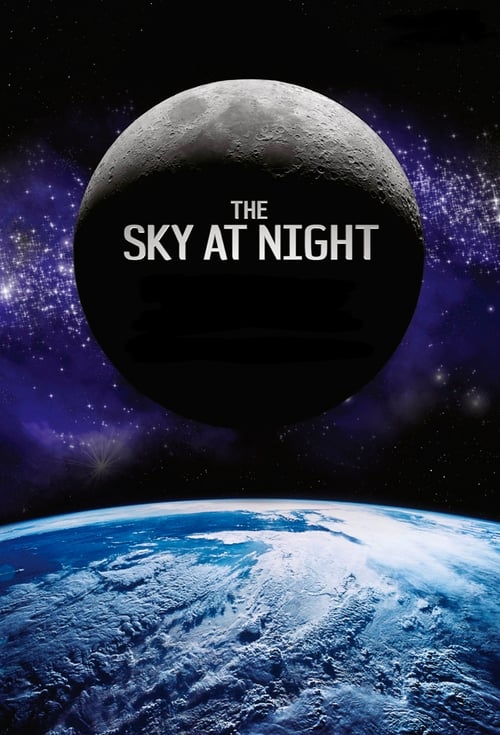
The Sky at Night2005Season 49 · 2005 · 14 episodesEpisodes1Lord of the RingsThe American and European spacecraft Cassini has been at Saturn now for six months. It has sent back fabulous images of the planet, its complex rings and many moons including the mysterious Titan. Patrick Moore discusses this and Cassini's probe Huygens, which will be sent to Titan on Christmas Day.2Unveiling TitanWe have seen the surface of Titan, Saturn's moon and one of the most mysterious solar system bodies. Patrick Moore talks to the lead scientist of the Huygens surface science package (SSP), Professor John Zarnecki, about the first results from the probe.3Strangers in the NightComets are thought to come from the Kuiper Belt beyond Pluto and the Oort Cloud at the very edge of our solar system. Little is known about this dark, far away home for comets. Patrick Moore debates the mysterious belts and the wandering strangers which escape from them. Also, the latest news from Mars, Saturn and the farthest regions of our Universe.4Star PartyFor the first time ever, Sir Patrick Moore has hosted a star party at his house in Selsey. Over two nights, amateur astronomers played lottery with the weather. Clouds, rain and fog played havoc with the viewing, but at last the night sky was revealed in all its glory.5Eye on the UniverseIn its 15 years, the Hubble Space Telescope has revolutionised astronomy with it's amazing insight into our Universe. Patrick Moore talks to Professor Gerry Gilmore about its highs and lows.6The Shocking SunSun spots and solar flares release high energy particles and radiation that can damage satellites and telecommunications, as well as creating the beautiful aurora in the atmosphere. Patrick Moore talks to Scottish astronomer Professor John Brown about the lastest solar mission, Rhessi, which is observing these incredibly violent outbursts from our nearest star, the Sun.7Deep ImpactNASA are sending a probe into the comet 9P/ Tempel-1, early on the morning of 4 July 2005. This is a unique event, from which they hope to find out how comets are made. Are they balls of ice and mud, the harbourers of life's components, or just solid rocks of sterile cosmic debris? The Deep Impact programme hopes to provide the answers, but this destructive act is not without its critics. The Sky at Night explores the pros and cons of hitting a comet.8Fallout From Deep ImpactOn 4 July NASA hopes to send an impactor into the comet 9P/Tempel-1. Patrick Moore talks to the world's leading comet experts about the fallout from this destructive act. Chris Lintott reports from Palomar Observatory in California, where astronomers will be eagerly watching the comet to see what happens when Deep Impact hits its mark.9The Search for LifeThe search for life elsewhere in our Universe has long been the Holy Grail for astronomers. Planets around distant stars have recently been discovered and we now realise that solar systems like our own could be widespread. So is life on Earth unique? With missions to Mars, Saturn's moon Titan and Jupiter's moon Europa, we could be nearing an answer. No definitive traces of life have been found elsewhere, but astronomers are probing ever deeper on our nearest planetary neighbours and across our Universe for the signitures of life. Patrick Moore discusses the issue with Professor Monica Gardy and Professor Simon Conway Morris.Chris Lintott spends a night meteor-watching with Dr John Mason, Martin Mobberly and Martin Andrews. Every year the Earth passes through dusty tail remnants of the comet Swift-Tuttle. These enter Earth's atmosphere-forming meteor showers called the perseids, this year they are at their maximum in mid-August.10A Journey through Space and TimeNeil Armstrong, Albert Einstein and Orville Wright are among the people Patrick Moore has met. He looks back on five decades of space exploration and the programme that has covered all major moments in astronomy.11Mapping The UniverseMan is scanning the night sky and counting stars, galaxies and other solar bodies. Patrick Moore discusses two of the most comprehensive surveys - 2dF and the Sloan Digital Sky Survey - and asks what they tells us about our Universe. Chris Lintott visits the Palomar Observatory in Southern California. Patrck also ventgures into his gardne to look at the Perseids.12The PlanetsIts been an incredible year for the planets, with amazing discoveries and startling new insights into our Solar System. Earlier this month, astronomers from around the World converged on Cambridge to discuss the latest planetary research. Chris Lintott reports.13Mars and the Ring of FireMars is almost as close as it can get to Earth and better placed than it will be for many years. Patrick Moore throws a Mars party in his back garden to enjoy the exceptional views of the red planet. Chris Lintott reports from Madrid, where he witnessed the dramatic annular eclipse, also called 'the ring of fire'.14Celestial ZooOur Sun is an ordinary star, but the celestial zoo contains stars as small as the Earth and others which are tens of thousands of times brighter. Patrick Moore takes a census and celebrates the tenth anniversary of the solar satellite Soho, which has produced spectacular images of flares, comets and sunspots the size of planets.Season 41Season 42Season 43Season 44Season 45Season 46Season 47Season 48Season 50Season 51Season 52Season 53Season 54Season 55Season 56Season 57Season 58Season 59Season 60Season 61Season 62Season 63Season 64Season 65Season 66Season 67Season 68Season 69Season 70